

Hello Data & AI Leaders,
When you think about the biggest risks associated with artificial intelligence, what comes to mind?
Job displacement? Privacy concerns? Algorithmic bias?
For Pope Leo XIV, the concerns run deeper.
In recent statements, he has warned that artificial intelligence could fundamentally reshape human dignity if developed without sufficient ethical oversight. He has drawn comparisons between forms of AI-driven exploitation and modern slavery, cautioning against a future where people are valued primarily for their economic utility rather than their inherent worth.
He has also expressed concerns about AI’s growing role in warfare. As autonomous systems become increasingly sophisticated, difficult questions emerge around accountability and human judgment. If critical decisions become delegated to machines, do we risk reducing human lives to statistics and victims to mere „data points“?
At first glance, these concerns may seem distant from the day-to-day reality of developing and implementing AI systems.
But they point to a broader issue.
The Question of Discernment
Recently, Anthropic researcher Chris Olah engaged in discussions with Pope Leo regarding artificial intelligence and ethics.
What makes this conversation particularly interesting is that it was not simply a debate between optimism and skepticism.
Olah highlighted AI’s potential to accelerate scientific discovery and contribute to solving major global challenges, including poverty. The technology already demonstrates remarkable potential across healthcare, education, and research.
In fact, this potential is already becoming tangible.
At St. Michael’s Hospital in Toronto, an AI-powered early warning system called CHARTwatch helped identify patients at risk of unexpected deterioration, enabling clinicians to intervene earlier and significantly reducing unexpected hospital deaths.
The same technology that raises ethical concerns in one context can save lives in another.
Which raises an important question:
How do we determine where and how AI should be used?
This is where Pope Leo’s emphasis on discernment becomes particularly relevant.
The challenge is no longer simply asking whether AI is powerful.
It is asking whether we are exercising sufficient judgment in deciding how that power is applied.
The Complexity Beneath the Surface
Another aspect of this discussion deserves attention.
Even some of the people building advanced AI systems acknowledge that there is still much to understand about how these models function internally.
Chris Olah’s work focuses extensively on interpretability, attempting to better understand why AI models produce certain outputs and how their internal mechanisms operate.
This uncertainty is not necessarily a reason to fear AI. But it does highlight an important reality: we are developing technologies whose capabilities are advancing rapidly, while our understanding of them continues to evolve.
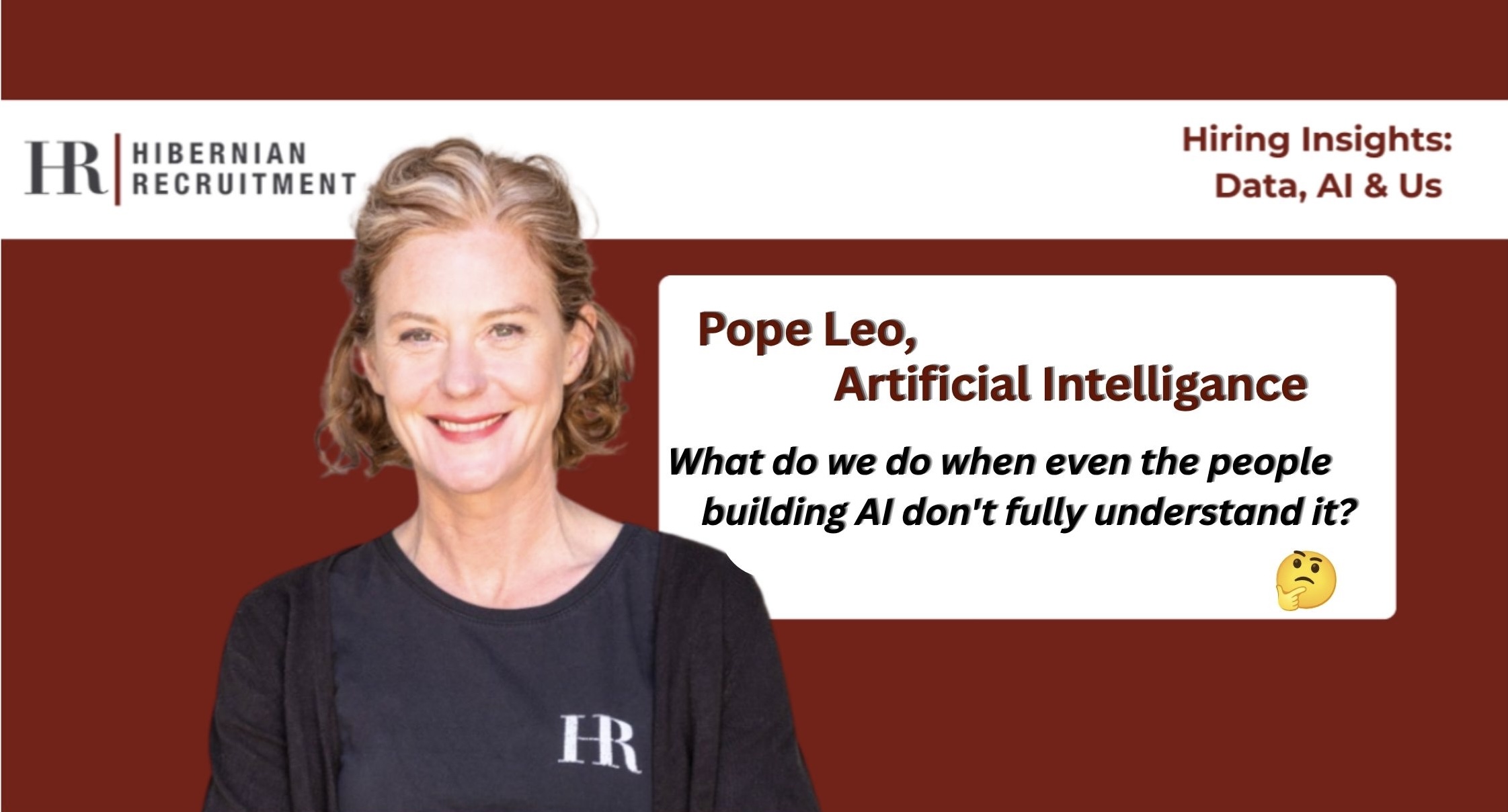
If even the people building these systems are still working to fully understand them, shouldn’t that concern all of us?
This isn’t necessarily an argument against AI.
After all, the same technology raising ethical concerns around warfare is already helping save lives, supporting scientific breakthroughs, and creating opportunities to address some of society’s biggest challenges.
Rather, it highlights why discernment matters.
The Real Challenge for Organisations
None of this suggests that AI development should slow down or stop.
The opportunities are simply too significant.
However, realising these benefits responsibly requires more than technological capability.
It requires people with the expertise to identify risks, challenge assumptions, implement safeguards, and ensure that innovation remains aligned with human values.
This is not only a technical challenge.
It is a leadership challenge.
Why Hiring Matters More Than Ever
As organisations continue to integrate AI into products, services, and decision-making processes, the demand for professionals who understand both the opportunities and limitations of these technologies continues to grow.
Software engineers, AI specialists, cybersecurity experts, governance professionals, and technical leaders all play a critical role in ensuring that AI systems are effective, safe, and trustworthy.
Yet many organisations still struggle to identify and attract the talent required to navigate this complexity.
That gap is where both risk and opportunity emerge.
That is exactly why I created Recruiting as a Service (RaaS).
RaaS is designed to help organisations build stronger technical teams by focusing not only on experience and qualifications, but also on critical thinking, problem-solving capabilities, and the ability to navigate emerging challenges responsibly.
Because as AI becomes increasingly embedded in our organisations and societies, the quality of hiring decisions directly influences how these technologies are developed and deployed.
RaaS helps organisations find the people capable of driving innovation while ensuring that responsibility keeps pace with progress.
Closing Thought
Perhaps the question is not whether AI will transform our world.
It already is.
The more important question is whether we are developing, governing, and staffing these systems with sufficient wisdom and discernment.
Because AI itself is neither inherently good nor inherently harmful.
Its impact will ultimately depend on the people building it, the leaders deploying it, and the choices we make along the way.
Until next time,
– Ann
👉 Subscribe here for my newsletter: https://mailchi.mp/5f1f83b27e9f/annsnewsletter
Hello Data & AI Leaders,
When you think about the biggest risks associated with artificial intelligence, what comes to mind?
Job displacement? Privacy concerns? Algorithmic bias?
For Pope Leo XIV, the concerns run deeper.
In recent statements, he has warned that artificial intelligence could fundamentally reshape human dignity if developed without sufficient ethical oversight. He has drawn comparisons between forms of AI-driven exploitation and modern slavery, cautioning against a future where people are valued primarily for their economic utility rather than their inherent worth.
He has also expressed concerns about AI’s growing role in warfare. As autonomous systems become increasingly sophisticated, difficult questions emerge around accountability and human judgment. If critical decisions become delegated to machines, do we risk reducing human lives to statistics and victims to mere „data points“?
At first glance, these concerns may seem distant from the day-to-day reality of developing and implementing AI systems.
But they point to a broader issue.
The Question of Discernment
Recently, Anthropic researcher Chris Olah engaged in discussions with Pope Leo regarding artificial intelligence and ethics.
What makes this conversation particularly interesting is that it was not simply a debate between optimism and skepticism.
Olah highlighted AI’s potential to accelerate scientific discovery and contribute to solving major global challenges, including poverty. The technology already demonstrates remarkable potential across healthcare, education, and research.
In fact, this potential is already becoming tangible.
At St. Michael’s Hospital in Toronto, an AI-powered early warning system called CHARTwatch helped identify patients at risk of unexpected deterioration, enabling clinicians to intervene earlier and significantly reducing unexpected hospital deaths.
The same technology that raises ethical concerns in one context can save lives in another.
Which raises an important question:
How do we determine where and how AI should be used?
This is where Pope Leo’s emphasis on discernment becomes particularly relevant.
The challenge is no longer simply asking whether AI is powerful.
It is asking whether we are exercising sufficient judgment in deciding how that power is applied.
The Complexity Beneath the Surface
Another aspect of this discussion deserves attention.
Even some of the people building advanced AI systems acknowledge that there is still much to understand about how these models function internally.
Chris Olah’s work focuses extensively on interpretability, attempting to better understand why AI models produce certain outputs and how their internal mechanisms operate.
This uncertainty is not necessarily a reason to fear AI. But it does highlight an important reality: we are developing technologies whose capabilities are advancing rapidly, while our understanding of them continues to evolve.
If even the people building these systems are still working to fully understand them, shouldn’t that concern all of us?
This isn’t necessarily an argument against AI.
After all, the same technology raising ethical concerns around warfare is already helping save lives, supporting scientific breakthroughs, and creating opportunities to address some of society’s biggest challenges.
Rather, it highlights why discernment matters.
The Real Challenge for Organisations
None of this suggests that AI development should slow down or stop.
The opportunities are simply too significant.
However, realising these benefits responsibly requires more than technological capability.
It requires people with the expertise to identify risks, challenge assumptions, implement safeguards, and ensure that innovation remains aligned with human values.
This is not only a technical challenge.
It is a leadership challenge.
Why Hiring Matters More Than Ever
As organisations continue to integrate AI into products, services, and decision-making processes, the demand for professionals who understand both the opportunities and limitations of these technologies continues to grow.
Software engineers, AI specialists, cybersecurity experts, governance professionals, and technical leaders all play a critical role in ensuring that AI systems are effective, safe, and trustworthy.
Yet many organisations still struggle to identify and attract the talent required to navigate this complexity.
That gap is where both risk and opportunity emerge.
That is exactly why I created Recruiting as a Service (RaaS).
RaaS is designed to help organisations build stronger technical teams by focusing not only on experience and qualifications, but also on critical thinking, problem-solving capabilities, and the ability to navigate emerging challenges responsibly.
Because as AI becomes increasingly embedded in our organisations and societies, the quality of hiring decisions directly influences how these technologies are developed and deployed.
RaaS helps organisations find the people capable of driving innovation while ensuring that responsibility keeps pace with progress.
Closing Thought
Perhaps the question is not whether AI will transform our world.
It already is.
The more important question is whether we are developing, governing, and staffing these systems with sufficient wisdom and discernment.
Because AI itself is neither inherently good nor inherently harmful.
Its impact will ultimately depend on the people building it, the leaders deploying it, and the choices we make along the way.
Until next time,
– Ann
👉 Subscribe here for my newsletter: https://mailchi.mp/5f1f83b27e9f/annsnewsletter