

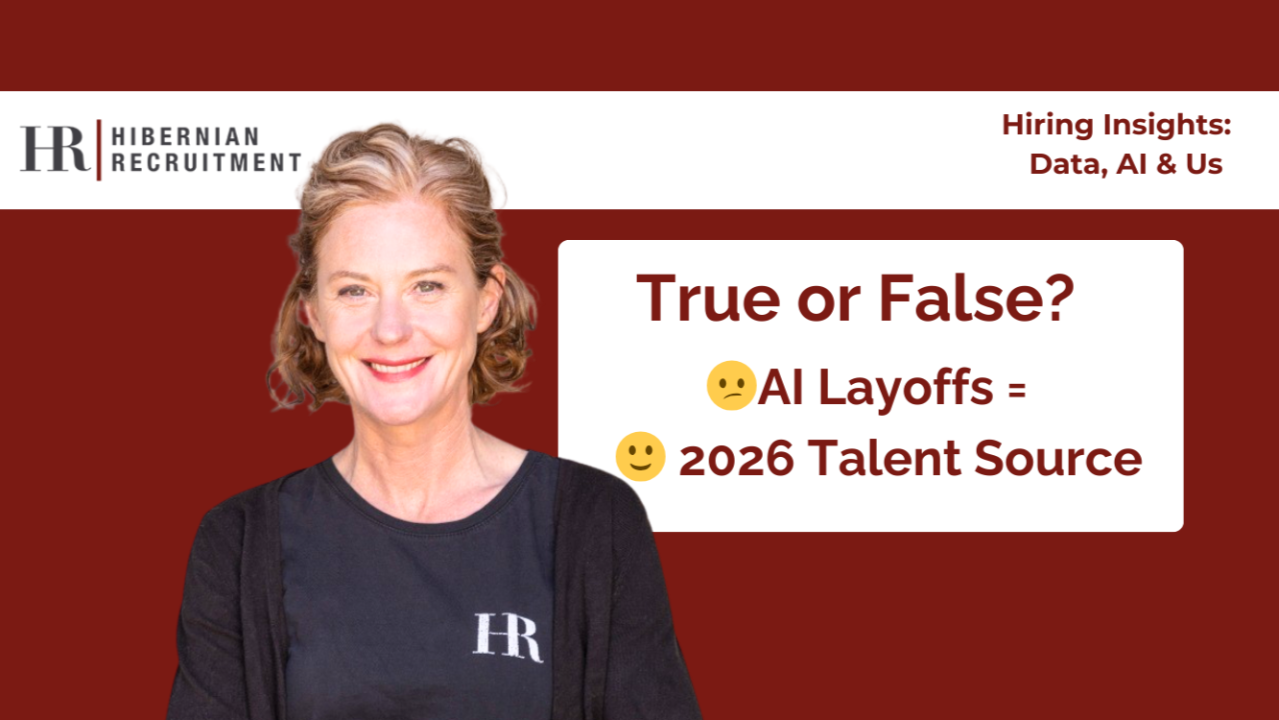
🤔 True or False? AI Layoffs are the New Source of Talent in 2026
Hello Data & AI leaders,
I’ve lived through several hiring market shifts. Offshoring cycles. Digitalisation waves. Enterprise restructurings. Each time, the market adjusted. This one feels fundamentally different.
AI and aggressive cost-cutting have already done something unprecedented: They have pushed people into readiness. Entire roles disappeared. Teams were reduced. Functions are being reshaped almost overnight. And now, early in the year, I’m seeing a clear pattern emerging across industries.
- There is talent available. Experienced talent. Motivated talent. People who are ready to move, adapt, and contribute. Yet that talent is not converting into hires.
What’s Broken Right Now
AI hasn’t just automated tasks. It has changed how people think about their careers. Many professionals now understand that their previous role may not exist in the same form ever again. As a result, they are open in ways I haven’t seen before. They are willing to reskill, move across sectors, and rethink how they apply their experience. The problem is that hiring systems have not evolved at the same pace.
Many professionals now understand that their previous role may not exist in the same form ever again.
Job descriptions still demand near-perfect CV symmetry. Screening processes still reward familiarity over capability. Filtering happens too early, too rigidly, and too slowly. The result is a quiet but costly failure. Companies believe there is a talent shortage, while highly capable candidates never even make it into conversation. Employers are not open to this kind of candidate, although they often believe they are.
This disconnect is already putting 2026 business goals at risk. Not because the talent doesn’t exist, but because the conversion from availability to hire is blocked.
Don’t Underestimate the Candidates
Through my recent coaching work, I’m seeing something rare and valuable. People are genuinely willing to change. They are moving sectors. They are reapplying skills. Many are even prepared to accept a lower salary in exchange for stability, learning, and long-term opportunity. They want to work. They want security. They want to contribute.
These are not junior profiles experimenting with options. These are experienced professionals whose earlier roles were disrupted by AI or restructuring. They bring maturity, judgement, and strong work ethic. They can learn new tools quickly and apply them responsibly.
These are experienced professionals whose earlier roles were disrupted by AI or restructuring.
This level of willingness is leverage. And it won’t last indefinitely. The hiring managers who stay open will build resilient teams this year. The ones who wait for perfect matches will still be searching for the same roles late into the year.
Why Recruiting as a Service Exists
Recruiting as a Service (RaaS) is about hiring better and faster. I designed RaaS because traditional recruiting processes cannot keep pace with specialised, business-critical roles. But RaaS can also help fix acceptance and match for energy and motivation. It can enable companies to access highly motivated people who want to reinvent themselves and are ready to deliver value quickly. Even companies that say they are open to transferable skills often revert to rigid CV matching once pressure rises. RaaS breaks that reflex. It forces attention onto capability, motivation, and business impact rather than surface similarity.
What This Means for 2026 Planning
If your 2026 goals depend on the right people being in place, then hiring cannot remain slow, rigid, or reactive. This market rewards clarity, openness, and momentum. AI has already done the hard reset. Now the question is whether hiring leaders adapt their processes, or miss one of the biggest hiring opportunities we have seen in years.
Now the question is whether hiring leaders adapt their processes, or miss one of the biggest hiring opportunities we have seen in years.
I’ve seen markets like this before. When systems change faster than habits, opportunity sits right in the gap. The companies that recognise it early build advantage. The rest spend the year wondering why execution falls behind strategy. If you want to talk through what this means for your hiring plans, or how Recruiting as a Service fits into your 2026 goals, I’m happy to connect.
Until next time,
– Ann
📩 Subscribe to this newsletter for more Hiring & Talent insights
🤔 True or False? AI Layoffs are the New Source of Talent in 2026
Hello Data & AI leaders,
I’ve lived through several hiring market shifts. Offshoring cycles. Digitalisation waves. Enterprise restructurings. Each time, the market adjusted. This one feels fundamentally different.
AI and aggressive cost-cutting have already done something unprecedented: They have pushed people into readiness. Entire roles disappeared. Teams were reduced. Functions are being reshaped almost overnight. And now, early in the year, I’m seeing a clear pattern emerging across industries.
- There is talent available. Experienced talent. Motivated talent. People who are ready to move, adapt, and contribute. Yet that talent is not converting into hires.
What’s Broken Right Now
AI hasn’t just automated tasks. It has changed how people think about their careers. Many professionals now understand that their previous role may not exist in the same form ever again. As a result, they are open in ways I haven’t seen before. They are willing to reskill, move across sectors, and rethink how they apply their experience. The problem is that hiring systems have not evolved at the same pace.
Many professionals now understand that their previous role may not exist in the same form ever again.
Job descriptions still demand near-perfect CV symmetry. Screening processes still reward familiarity over capability. Filtering happens too early, too rigidly, and too slowly. The result is a quiet but costly failure. Companies believe there is a talent shortage, while highly capable candidates never even make it into conversation. Employers are not open to this kind of candidate, although they often believe they are.
This disconnect is already putting 2026 business goals at risk. Not because the talent doesn’t exist, but because the conversion from availability to hire is blocked.
Don’t Underestimate the Candidates
Through my recent coaching work, I’m seeing something rare and valuable. People are genuinely willing to change. They are moving sectors. They are reapplying skills. Many are even prepared to accept a lower salary in exchange for stability, learning, and long-term opportunity. They want to work. They want security. They want to contribute.
These are not junior profiles experimenting with options. These are experienced professionals whose earlier roles were disrupted by AI or restructuring. They bring maturity, judgement, and strong work ethic. They can learn new tools quickly and apply them responsibly.
These are experienced professionals whose earlier roles were disrupted by AI or restructuring.
This level of willingness is leverage. And it won’t last indefinitely. The hiring managers who stay open will build resilient teams this year. The ones who wait for perfect matches will still be searching for the same roles late into the year.
Why Recruiting as a Service Exists
Recruiting as a Service (RaaS) is about hiring better and faster. I designed RaaS because traditional recruiting processes cannot keep pace with specialised, business-critical roles. But RaaS can also help fix acceptance and match for energy and motivation. It can enable companies to access highly motivated people who want to reinvent themselves and are ready to deliver value quickly. Even companies that say they are open to transferable skills often revert to rigid CV matching once pressure rises. RaaS breaks that reflex. It forces attention onto capability, motivation, and business impact rather than surface similarity.
What This Means for 2026 Planning
If your 2026 goals depend on the right people being in place, then hiring cannot remain slow, rigid, or reactive. This market rewards clarity, openness, and momentum. AI has already done the hard reset. Now the question is whether hiring leaders adapt their processes, or miss one of the biggest hiring opportunities we have seen in years.
Now the question is whether hiring leaders adapt their processes, or miss one of the biggest hiring opportunities we have seen in years.
I’ve seen markets like this before. When systems change faster than habits, opportunity sits right in the gap. The companies that recognise it early build advantage. The rest spend the year wondering why execution falls behind strategy. If you want to talk through what this means for your hiring plans, or how Recruiting as a Service fits into your 2026 goals, I’m happy to connect.
Until next time,
– Ann
📩 Subscribe to this newsletter for more Hiring & Talent insights